
Is Testosterone Treatment Right for You in 2026? Signs, Tests & Next Steps
January is resolution season. Gym memberships surge, meal-prep containers sell out, and wearable trackers light up with fresh goals. Yet thousands of men soon discover that discipline alone can’t fix crushing fatigue, vanishing muscle, or a bedroom spark that won’t reignite. When willpower meets hormonal reality, the conversation turns to testosterone treatment.
This guide breaks down what low T actually looks like in 2026, the gold standard tests to confirm it, and the safest therapy strategies—so you can decide, with data, whether medical intervention belongs on your New Year upgrade list.
1. Why Testosterone Matters More Than Ever
Testosterone isn’t just a “sex hormone.” It powers red blood cell production, cognitive drive, insulin sensitivity, bone density, and even emotional resilience. Modern stressors—blue light sleep disruption, ultra processed diets, endocrine disrupting plastics—chip away at natural production faster than in previous decades. By age 35, the average man already secretes 15–20 % less T than his father did at the same age.
2. Clues You Might Be Running Low
Low testosterone rarely announces itself with a single dramatic symptom. Instead, men report a collection of subtler changes:
• Declining morning erections or weaker rigidity
• Notable drop in gym performance or slower recovery despite consistent training
• Persistent afternoon fatigue or brain fog
• Increased abdominal fat even at unchanged calorie intake
• Irritability or “flat” mood that friends and partners notice
• Low motivation for sex, work projects, or hobbies once enjoyed
If two or more of these resonate, lab work is the next logical step.
3. Essential Lab Tests for 2026
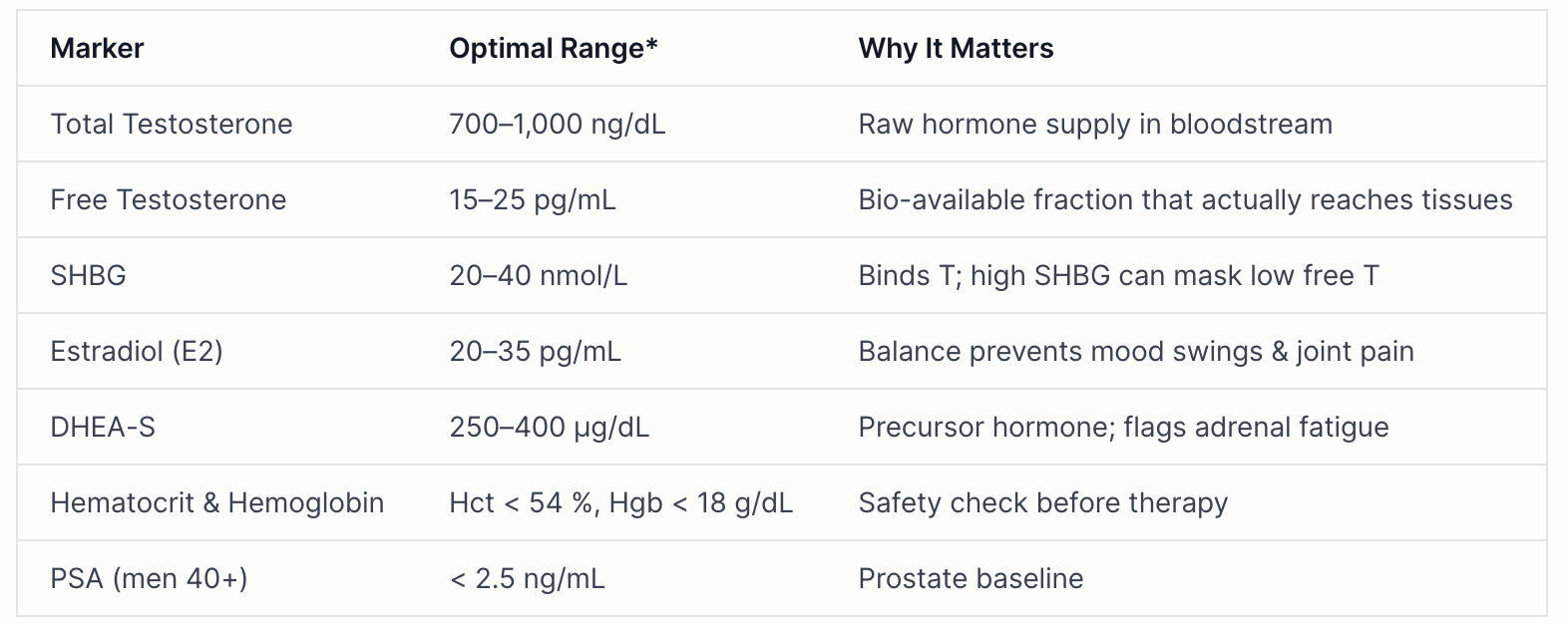
Getting accurate numbers is half the battle. Insist on these markers for a full picture:*Optimal ranges per current endocrine consensus, not merely “normal” population averages.
Pro Tip: Schedule the draw between 7 – 9 a.m., fast 8–12 hours, and skip hard training for 24 hours to avoid skewed cortisol/T levels.
4. Evidence-Backed Testosterone Treatment Paths
Bio Identical Testosterone Cypionate Injections
• Weekly or twice-weekly dosing avoids the peak and crash pattern of older “mega” shots.
• Allows precise milligram titration based on follow-up labs every 8–12 weeks.Compounded Transdermal Creams
• Applied daily to thin-skinned areas (inner forearm, scrotum).
• Lower hematocrit risk but require stringent application routine.Short-Acting Subcutaneous Pellets
• Inserted every 4–5 months for men who favor “set and forget.”
• Less dose flexibility; early removal requires a minor procedure.Adjunct Peptide & Fertility Protocols
• Gonadorelin or kisspeptin-10 can maintain testicular size and endogenous fertility during TRT.
• BPC-157 or TB-500 peptides accelerate tendon recovery as strength returns.
5. Safety First—2026 Best Practices
• Monitor Every 90 Days (Year One) – Check hematocrit, estradiol, PSA, and liver enzymes to catch issues early.
• Control Estradiol, Don’t Nuke It – Aromatase inhibitors are used only if E2 exceeds 45 pg/mL with symptoms; over-blocking harms joints and mood.
• Give Blood if Hct > 53 % – A quick therapeutic phlebotomy resets viscosity and cardiovascular risk.
• Lifestyle Levers Still Matter – Seven hours of sleep, resistance training, and a protein-rich Mediterranean diet amplify therapy benefits and keep dose requirements lower.
6. Who Should Not Start Testosterone Treatment (Yet)
• Men trying to conceive in the next 6–12 months without a fertility safeguard protocol
• Individuals with untreated severe sleep apnea
• Anyone with active prostate or breast cancer
• Hematocrit already > 54 % or uncontrolled hypertension
A qualified clinician can correct these issues first, then revisit TRT if still indicated.
7. The Novus Center’s “Data-Driven TRT” Framework
Comprehensive On Ramp – We run the full lab suite plus sleep, nutrition, and stress audits to identify reversible blockers (e.g., insulin resistance).
Precision Dosing & Peptide Stack – Bio identical testosterone paired with fertility preserving peptides—customized down to the milligram.
Quarterly Optimization – Each 12 week check-in reviews labs, body comp, mood, and libido, adjusting dose or adjuncts accordingly.
Lifestyle Integration – In-house dietitians and performance coaches bake in training and nutrition so therapy isn’t carrying the load alone.
8. Next Steps If You’re Curious
Self Audit – Note any of the symptoms listed above over a two week period.
Book a Hormone Snapshot – Fasted morning labs provide the objective data.
Review Results With a Specialist – Decide whether lifestyle tweaks, peptide priming, or full testosterone treatment best fits your 2026 goals.
Conclusion
Ambitious New Year goals crash when hormones are running on empty. If fatigue, stubborn fat, or fading drive have crept in, a targeted look at testosterone treatment may be the upgrade you need—not a shortcut, but a scientifically grounded accelerator.
Ready to find out where you stand? Schedule your January Hormone Snapshot with The Novus Center and turn raw data into unstoppable momentum for 2026.


