
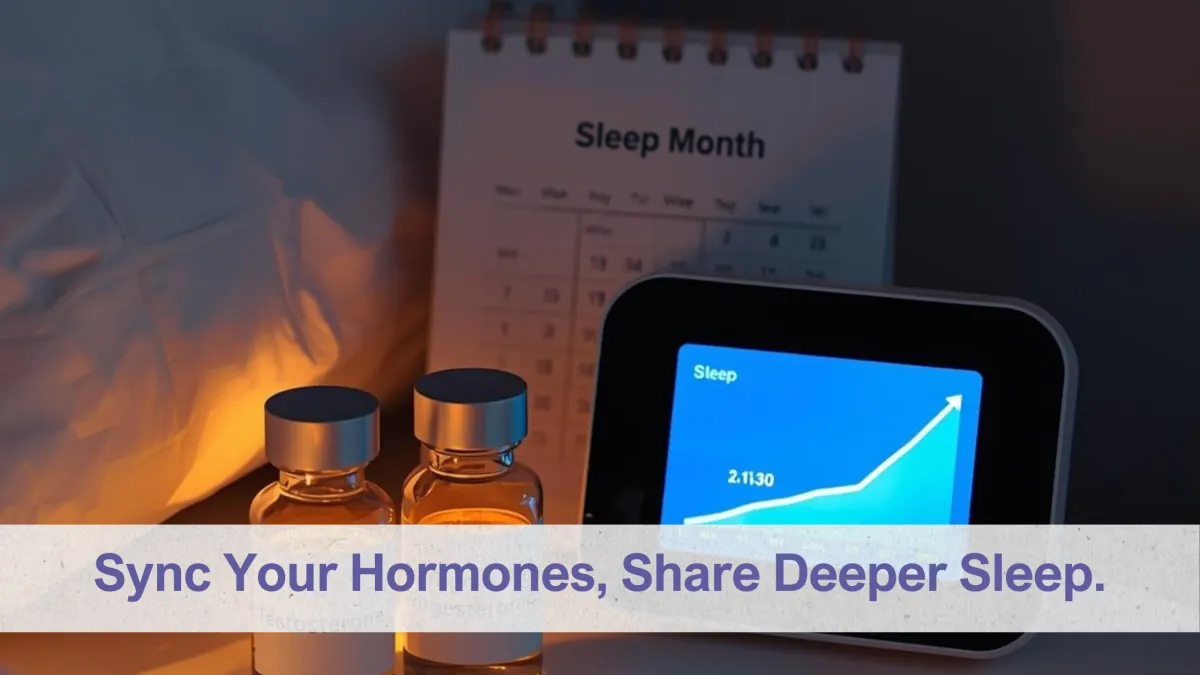
Lose an Hour, Not Your Mojo: The Hormone-Circadian Fix for March Fatigue
The clocks already jumped ahead—yet your brain still feels one time-zone behind.
If you’re yawning through meetings, ghosting the gym, or downing double lattés to stay civil, you’re living the classic “DST hangover.”
Caffeine helps for an hour.
Calibrating your hormones helps for good.
Why You’re Still Dragging a Week Later
Melatonin got thrown off by the sudden light shift.
Cortisol, your natural alarm clock, is still snoozing.
Low testosterone, estrogen, or progesterone make deep-sleep fragile; dropping one hour felt like dropping three.
Melatonin and cortisol set the schedule, but your sex hormones decide how strong the signal is. Great planners, lousy equipment—that’s the problem.
Quick Gut-Check: Are Hormones Holding You Back?
• Two alarms and you still hit snooze
• Coffee works till lunch, then a hard crash
• Workouts feel like you strapped on ankle weights
• Random 3 a.m. wake-ups or night sweats
Check two or more? Time for a fast blood draw—total & free testosterone, estradiol, progesterone, plus AM cortisol.
The 7-Day “Bounce-Back” Hormone Plan
(Start today—no prep week required.)
Day 1 (Today)
• Book morning labs for tomorrow; finish dinner by 7 p.m. and dim lights an hour before bed.
• Take 400 mg magnesium glycinate with dinner for calmer sleep cycles.
Day 2 – Lab + Light Reset
• Fasted labs before 9 a.m.
• Right after the draw, spend 20 minutes in daylight—phone call, coffee outside, whatever. Natural light slaps melatonin back on schedule.
Day 2 Evening
• Review labs with a clinician (tele-review works). If free T, estradiol, or progesterone are below functional ranges, start micro-dose bio-identical therapy the same day. Small, physiologic doses kick in quickly.
Days 3–7 — The Recovery Loop
Morning
Same 20-minute daylight walk—every. single. morning.
Take hormones at the same time daily.
Afternoon
3. Two zone-2 cardio sessions this week (brisk 30-min walk or easy bike). Exercise bumps daytime T/E2 and pushes cortisol earlier—perfect for deeper sleep.
Evening
4. Screens down 60 minutes before bed.
5. Keep the room 65-68 °F; cooler temps extend deep-sleep even when hormones lag.
Most Novus Center clients feel back to normal energy by Day 4; wearables show deep-sleep minutes climbing by 12–15 %.
Everyday Habits to Lock In the Win
Protein-first breakfast, carbs with dinner – nudges cortisol up in the a.m. and sleep hormones up at night.
Strength train twice a week – lean muscle naturally raises testosterone in men and women.
Caffeine curfew at 1 p.m. – afternoon shots keep your brain partying past bedtime.
Hydrate early, not late – fewer 2 a.m. bathroom runs equals uninterrupted REM.
Myth Buster Corner
• “Melatonin gummies will fix this.”
They tell your body when to sleep, not how to sleep. Hormones handle architecture.
• “A week of hormone therapy can’t help.”
Even small corrections improve sleep quality within days; long-term perks stack from there.
• “DST fatigue just fades on its own.”
Sure—after two to three weeks. Tuning hormones trims that to days.
Time to Reclaim Your March
You can’t un-do the clock change, but you can stop it from owning your month. Schedule a Post-DST Hormone Rescue at The Novus Center, and get your mojo back by next Monday.
Catch up, power up, and keep spring moving in the right direction.


